If the temperature of the heating element is measured, it is possible to increase the stability of the heating system using two interconnected PID Smart rules (so-called cascade PID control).
Comparison with simple hysteresis control:
| Cascade PID control | Hysteresis |
|---|---|
| ✅ smooth continuous control | ✅ fast start |
| ❌ slow start | ❌ oscillating control |
An example of using cascade PID control in underfloor heating, where the temperature under the floor and the temperature in the room are measured.
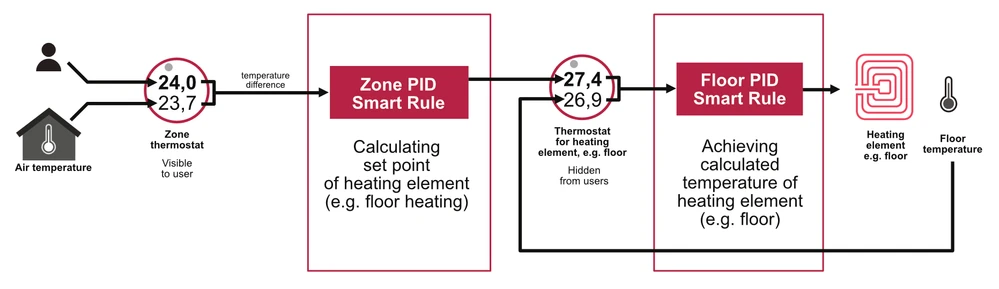
| Parameter | Zonal PID Smart rule | Floor PID Smart rule |
|---|---|---|
| Output actuator | Thermostat for the heating element 0% … 19 ºC 100% … 28 ºC | Switch (relay), 15-minute switching period |
| Limit temperature | Optional: 10 ºC - 30 ºC (default), adjustable in the zone thermostat service settings | Optional: Floor temperature sensor, max. temperature 28 ºC |
The maximum floor temperature allowed by hygienic standards is 28 ºC. However, for heating purposes it is possible to use a few degrees more (e.g. 36 ºC), because the sensor measures the temperature beneath the floor surface.